All photos and text by Jack Rothman. All rights reserved. No photo may be copied or duplicated without written permission. Copyright 2026
Updated 10/11/26
City Island Birds
Since 2007
Welcome to City Island Birds. My name is Jack Rothman. I created this website and birding club because this area of New York City is little known and underutilized by birdwatchers and other nature lovers. Pelham Bay Park, with its woods and wetlands is a critical stopover and nesting area to many migratory species.
Our Mission
City Island Birds was created in 2007 to bring birders, and would be birders, to the park. Everyone has always been and always will be welcome. Our walks are always inclusive, friendly, non-competitive, fun and free. We all love to see great birds, but without each other, it's never as enjoyable.
Saul's Science Watch
My birding buddy Saul has been writing wonderful science articles for the Hudson River Audubon Society. You can link for years of wonderful insights and information. Just scroll to the bottom of the page for a complete list of the articles.
Five Quick Beginning Birding Suggestions
1. Go out with a group or an experienced leader. You'll learn how to use binoculars, find birds, meet interesting and friendly people.
2. Wear appropriate clothes. Weather is always a little more extreme in open spaces. Don't wear your brand new $200 running shoes. It can be muddy.
3. Most leaders have binoculars to lend if you don't have your own. Opera glasses are pretty useless for birding. If you want to buy a pair, email me and I will make suggestions depending on your budget.
4. Bring a snack and water. Most walks are a few hours. You'll see that birding is not fast walking. Expect to be moving slowly.
5. Get a portable field guide to bring with you when you bird alone. Use it at home too. Look for the Peterson or Sibley guide.

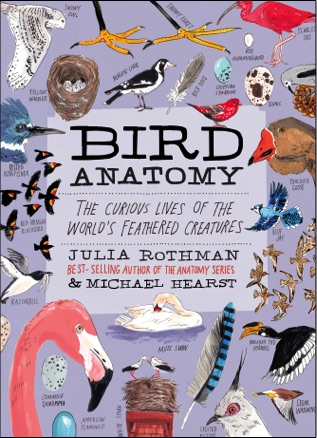
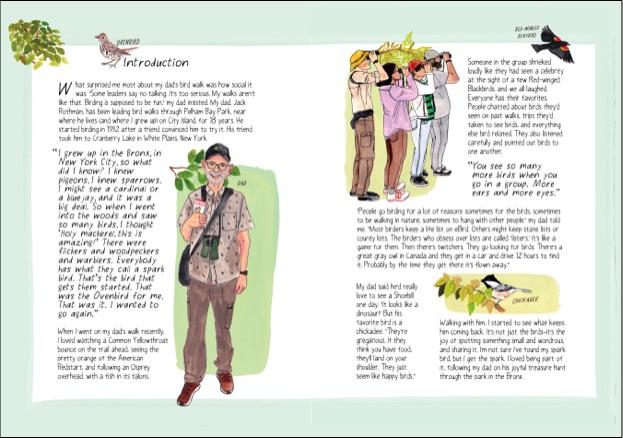
In mid- October my daughter Julia's latest book will be available! It's called, “Bird Anatomy,” and is the latest in her series, Farm Anatomy, Food Anatomy, Nature Anatomy, Ocean Anatomy and Insect Anatomy. It's dedicated to the “City Island Birders” and has a few pages on how I lead bird walks. It's not a field guide but a kind of celebration of birds, full of great information and amazing illustrations. It's available on Amazon, book sellers, museum shops and Audubon stores.
To the left is a short promotional video of us birding together here in Pelham Bay Park.
Names Given To Groups of Birds
Based on History and Literature
From The Verb To Bird, Peter Cashwell (Paul Dry Pub. 2003)
A gaggle of geese ( in water)
A charm of finches
A tiding of magpies
A descent of woodpeckers
A mustering of storks
A parliament of owls
A host of sparrows
A siege of herons
An unkindness of ravens
A cast of hawks
An ostentation of peacocks
A murder of crows
A walk of snipe
Upcoming Birding Tours with Jack
10/24 Bird walk in Prospect Park, an event for the launch of "Bird Anatomy." Please link for info and registration.
Question? Contact me, jack@cityislandbirds.com
From An Exaltation of Larks, James Lipton (Penguin pub. 1993)
A party of jays
A gatling of woodpeckers
A murmuration of starlings
(in air)
A clutter of starlings
(on ground)
A mutation of thrushes
A fall of woodcock
A skein of geese (in air)
An exaltation of larks
A shimmer of hummingbirds
A spring of teal ( ducks)
A sorde of mallards
A rafter of turkeys
A descent of woodpeckers
A convocation of eagles
A leash of merlins
Pete Dunne, in his book, Pete Dunne on Bird Watching: The How-to, Where-to and When-to of Birding:
"The difference between a beginning birder and an experienced one is that beginning birders have misidentified few birds. Experienced birders have misidentified thousands."
A terrific ABA blog post called "Birding is Hard" from April 22, 2015 can be found here.
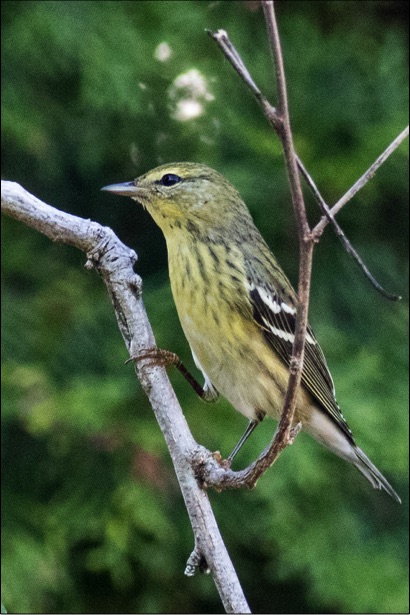
A Blackpoll Warbler in late September in my backyard.
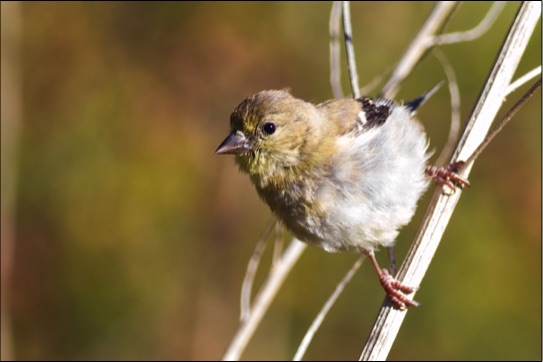
An American Goldfinch in it's non-breeding color in early autumn.
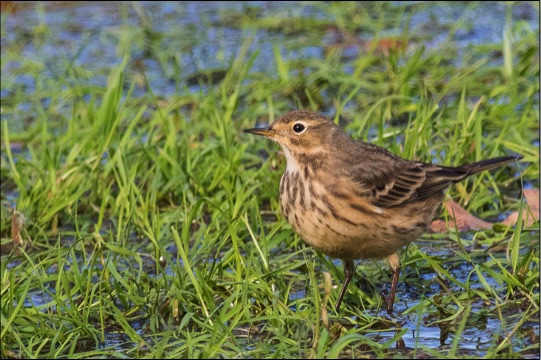
An American Pipit in the Orchard Beach Oval a couple of years ago.
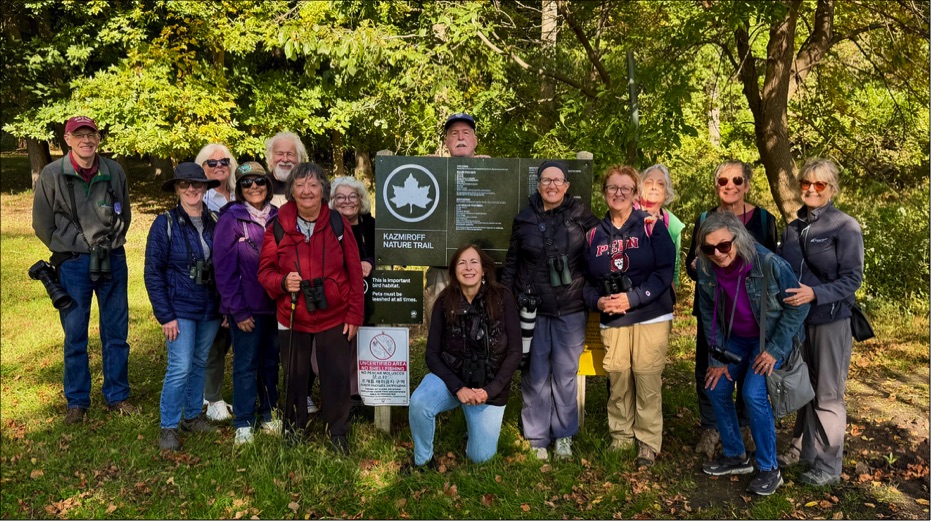
This is the terrific bunch of birders who attended the walk at Van Cortlandt Park on Sunday, October 4. We had a good time in the area behind the mansion. The NYC Parks Department didn't cut the foliage and there were lots of birds. Link for species account.
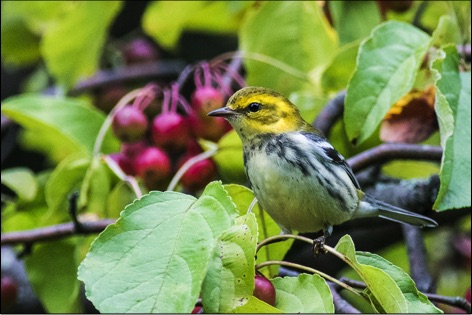
A Black-throated Green Warbler at Turtle Cove in October.
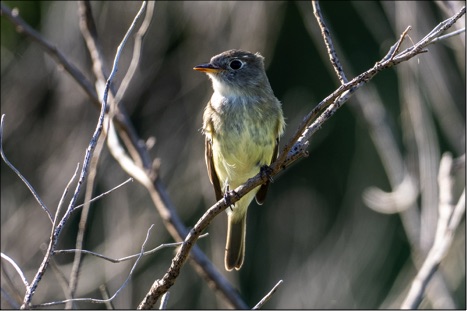
This photo I took went up for discussion a few weeks ago. I believe it's a Least Flycatcher. Photographed in the Southern Zone of the park.
The Fall Migration, a long trip south.
The fall migration will begin to wane toward the end of October. If you have the opportunity to choose a day of birding, look for a day when NW winds are predicted. With NW winds, birds will hopefully get pushed to the coast as the go south, This gives us a better chance to see them. There's a saying among birders, "you should have been here five minutes ago." Birds are on the move and birds appear and disappear minute by minute. Persistence and focus pays off. Birding on Hunter Island has been slow, so I would recommend going to the Southern Zone for passerines. Warblers, flycatchers and other songbirds are still being found. As always, be sure to protect yourself with insect repellant.
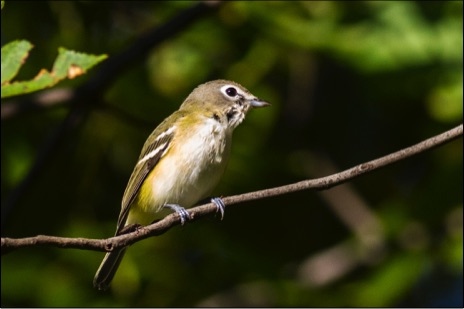
This Blue-headed Vireo was down by the swinging gate on Hunter Island in October. Not a common bird here
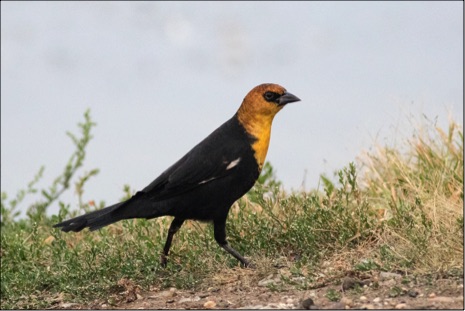
Here's a rarity in NYC. A Yellow-headed Blackbird was reported near the Throggs Neck Bridge a few years ago. I got up at dawn and chased it. A lifer for me.
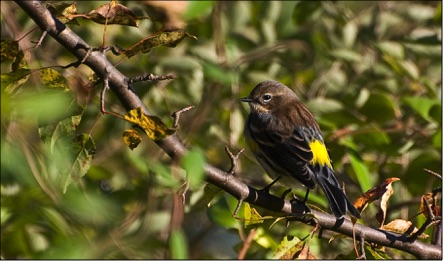
A Yellow-rumped Warbler in late September. They will be one of the last warblers to migrate through.
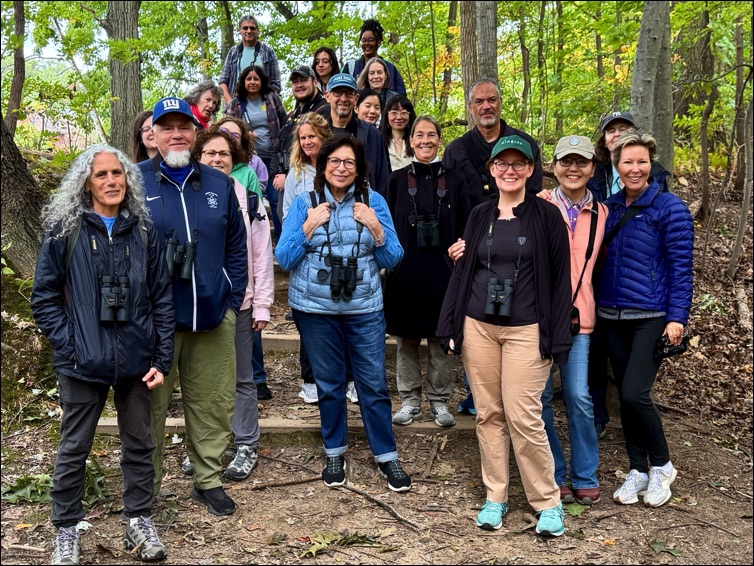
On Thursday, Oct.8, The Garden Club of City Island assembled for a walk at Orchard Beach. We had a great start, seeing Palm, Blackpolls and American Redstart Warblers. Other highlights were multiple Golden-crowned Kinglets and a Cooper's Hawk. It was terrific group, friendly, curious and cheerful. In all we saw twenty species in a about and hour and a half. It was a beautiful day and it was great to have help from some experienced birders, Hailey Clancy, Ted Kavanaugh and Joseph McManus.
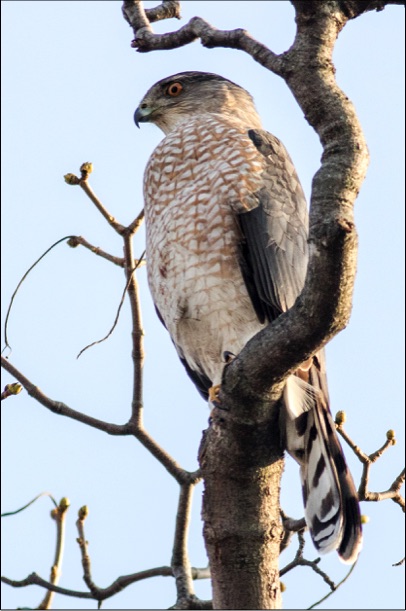
A Coopers Hawk on Hunter island. We briefly spotted one on our last walk on 10/8 with The City Island Garden Club.